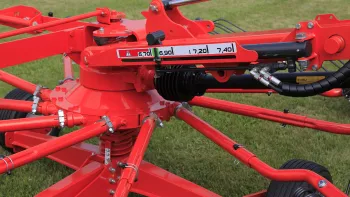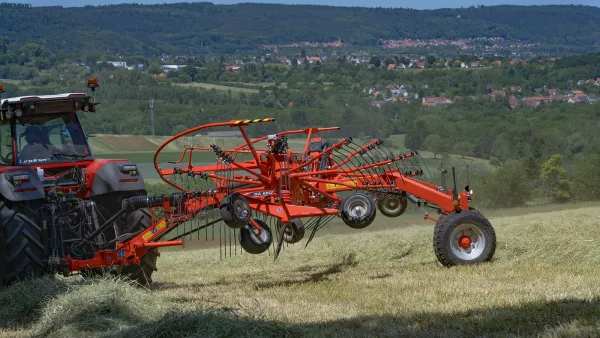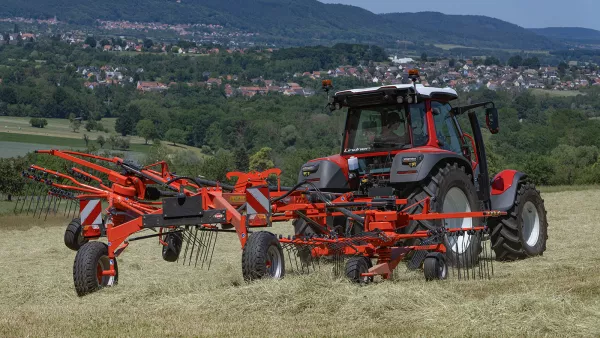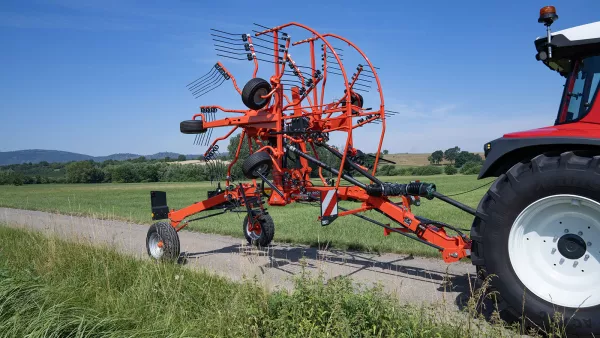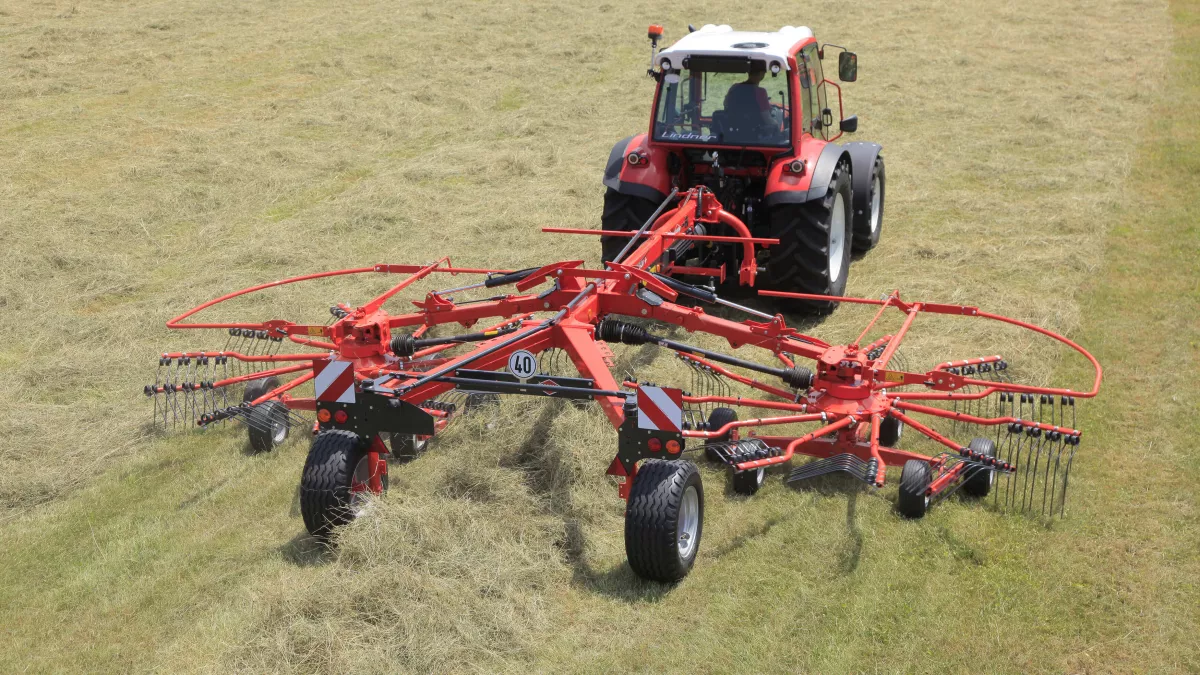

The windrow formation: an asset thanks to the double-bent tine arms
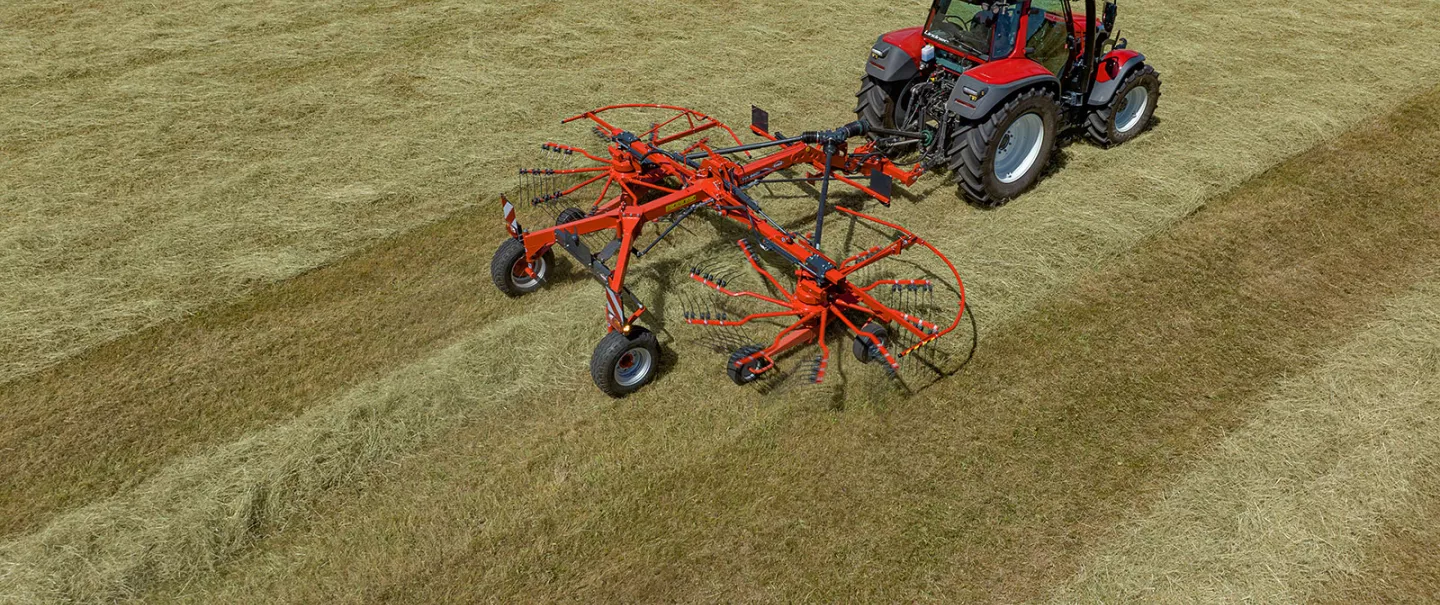
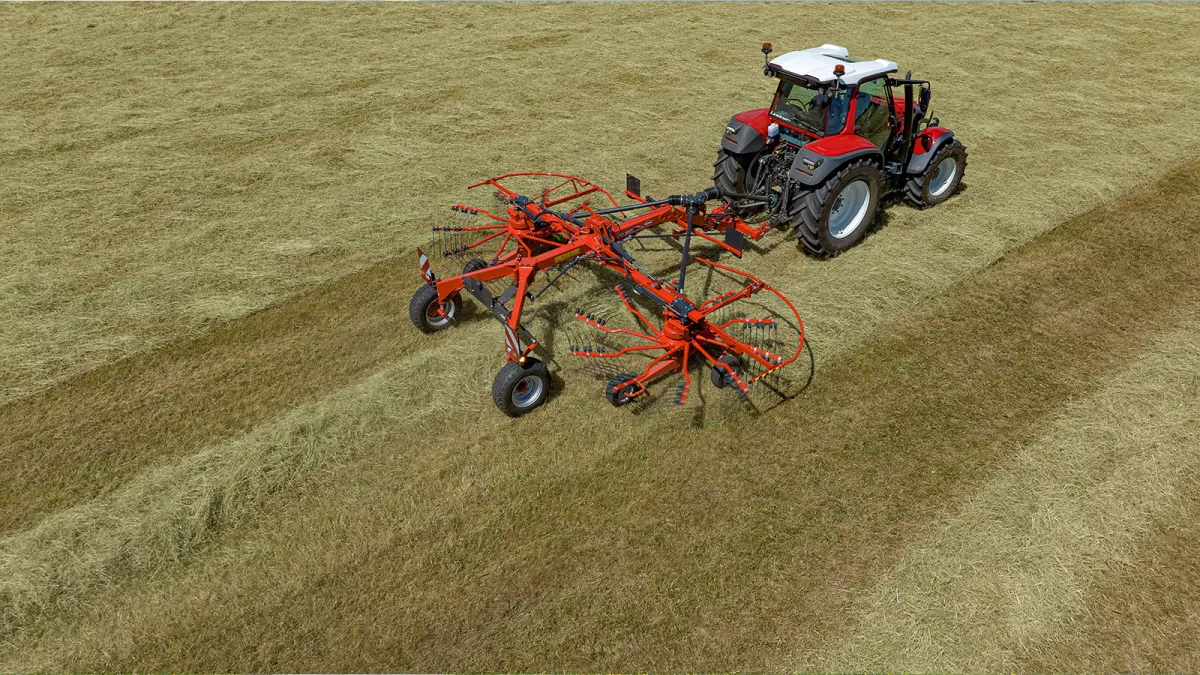
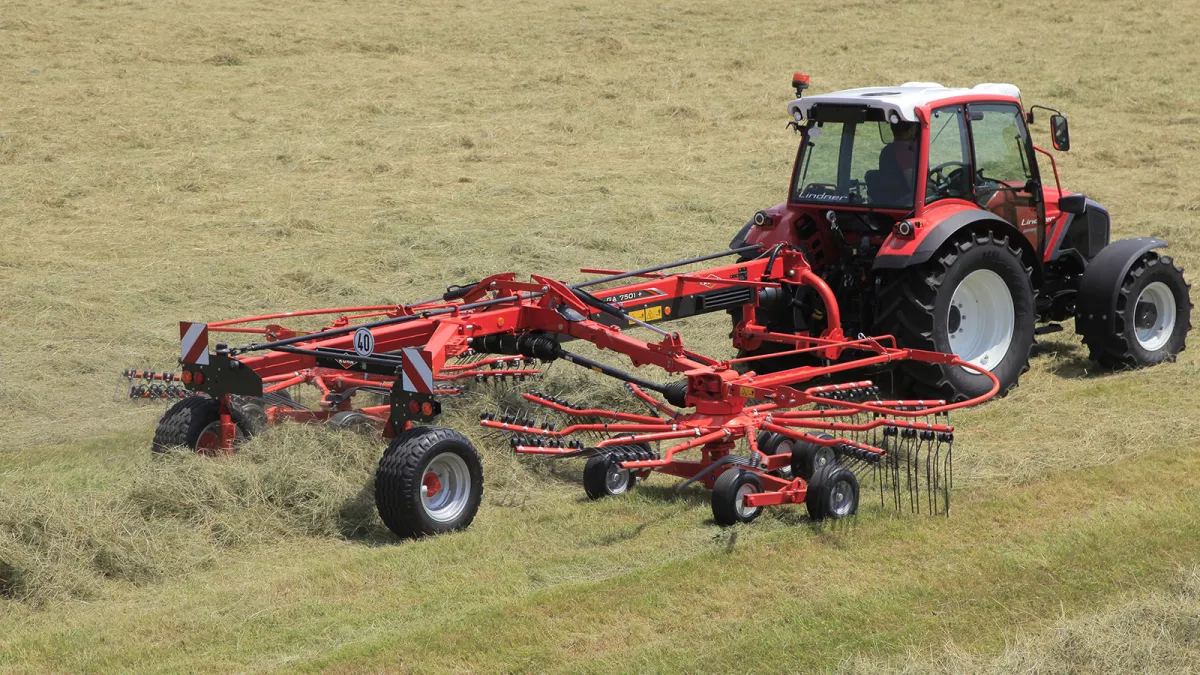
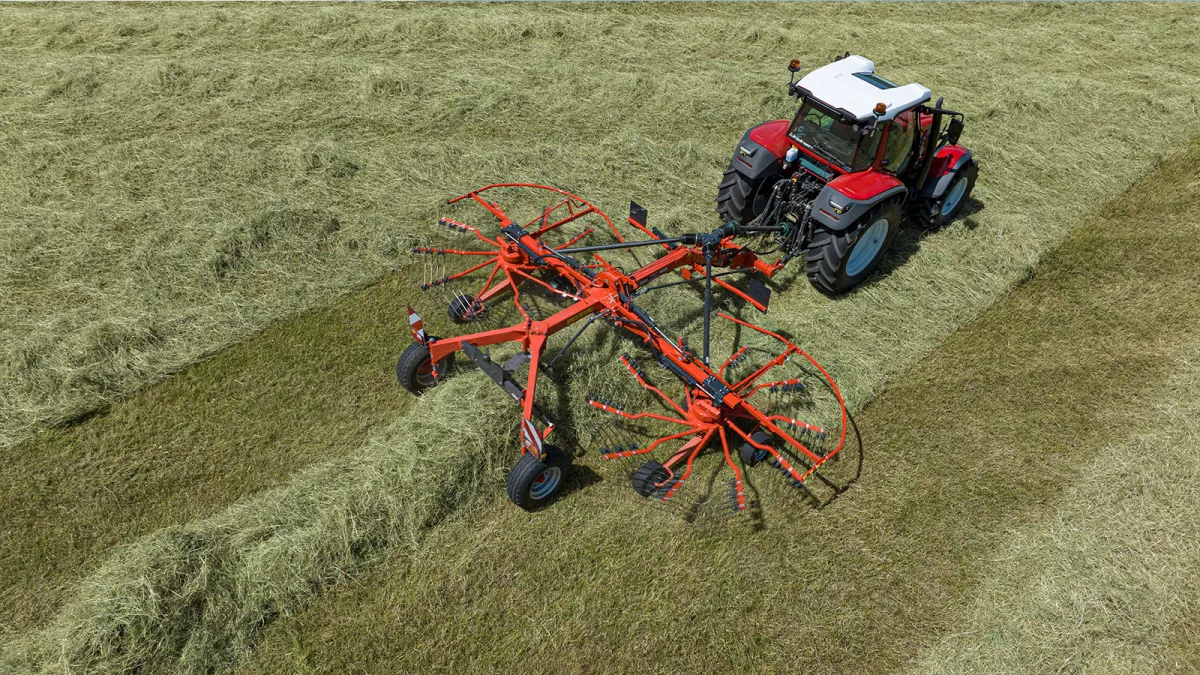
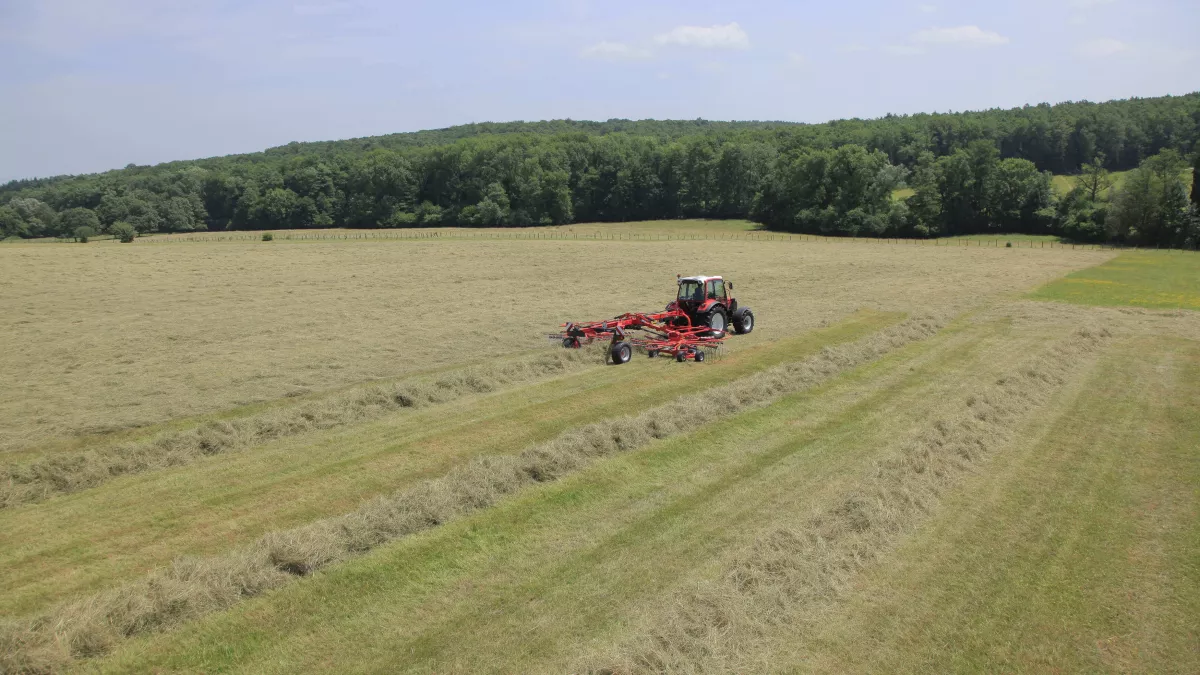
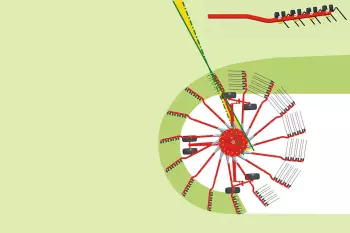
Uniformity and volume in the windrows are prerequisites for rapid drying and easy pickup by balers and other harvesting equipment. The tine arms on GA rakes feature a highly tangential positioning. This means they reach a 90° angle very late in the cycle. Combined with the steep cam track, the tines lift quickly and late, requiring minimal rotational effort. The resulting windrows are more uniform, voluminous, and straight. Raking quality remains high even at faster speeds because the fodder is not pushed beyond the windrow. Key advantages of the double-bent tine arms:
- They reduce the distance between tine passes. Fodder losses are kept to a minimum, even at high ground speeds.
- The weight is centered on the tine arm. This extends its service life, as it is not subjected to pressure during rotation. Consequently, the guide rollers are exposed to less stress.